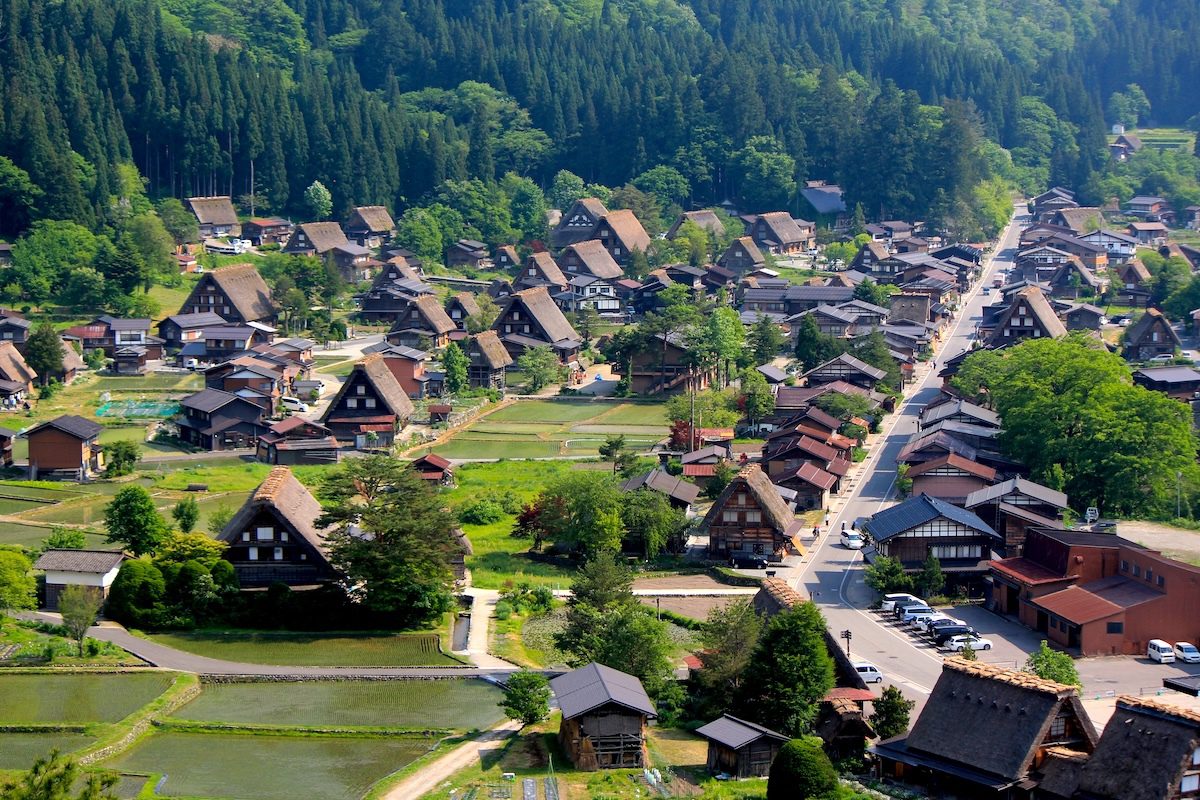
The Japanese population is in decline, but the downward trend is especially pronounced in rural areas. The loss of people might be expected to lead to a resurgence of wildlife. But paradoxically, where farms have been abandoned, wildlife is also disappearing.
Researchers say that small farms in the Japanese foothills have created mosaic landscapes with rice paddies, open pastures, and scattered woodlands that provide homes to many kinds of wildlife. Where humans cut down trees for firewood and gathered leaves for fertilizer, they made room for orchids and azaleas, Nature reports . Where farmers dug rice paddies, they made a home for rice fish and heike fireflies. Broadly speaking, many species found on farms have evolved together with humans, scientists say .
A 2025 study from Japan found that biodiversity was stable only in places where the human population was also stable. In areas where the population had declined, researchers recorded a drop in the abundance of butterflies, fireflies, frogs, birds, and native plants.
The trends in Japan mirror those in many other nations, from Spain to China, where rural areas are emptying out as people move to cities in search of work. Landscapes that were shaped by people are being taken back by nature, but often to the detriment of species that depended on human tending.
A recent study of the Lake Constance region in the European Alps found that plant diversity peaked in the medieval era, when small farms created a patchwork of fields, pastures, and forests that supported a greater array of plants than either the closed forests that came before or the industrial farms that would follow.
“The broader lesson is that, in modern conservation, the choice isn’t simply between farming and biodiversity,” said its lead author, Adam Spitzig, a PhD candidate at Stanford University. Small, diversified farms, he said, “can boost and sustain biodiversity while supporting food production.”
What Is Driving the Global Resurgence of Mangrove Forests?
Arctic Wildlife Research Suffers as Geopolitical Competition Grows
Fifty Billion Seedlings: Can Ethiopia Replant Its Ravaged Forests?
By Samuel Abate and Freddie Clayton