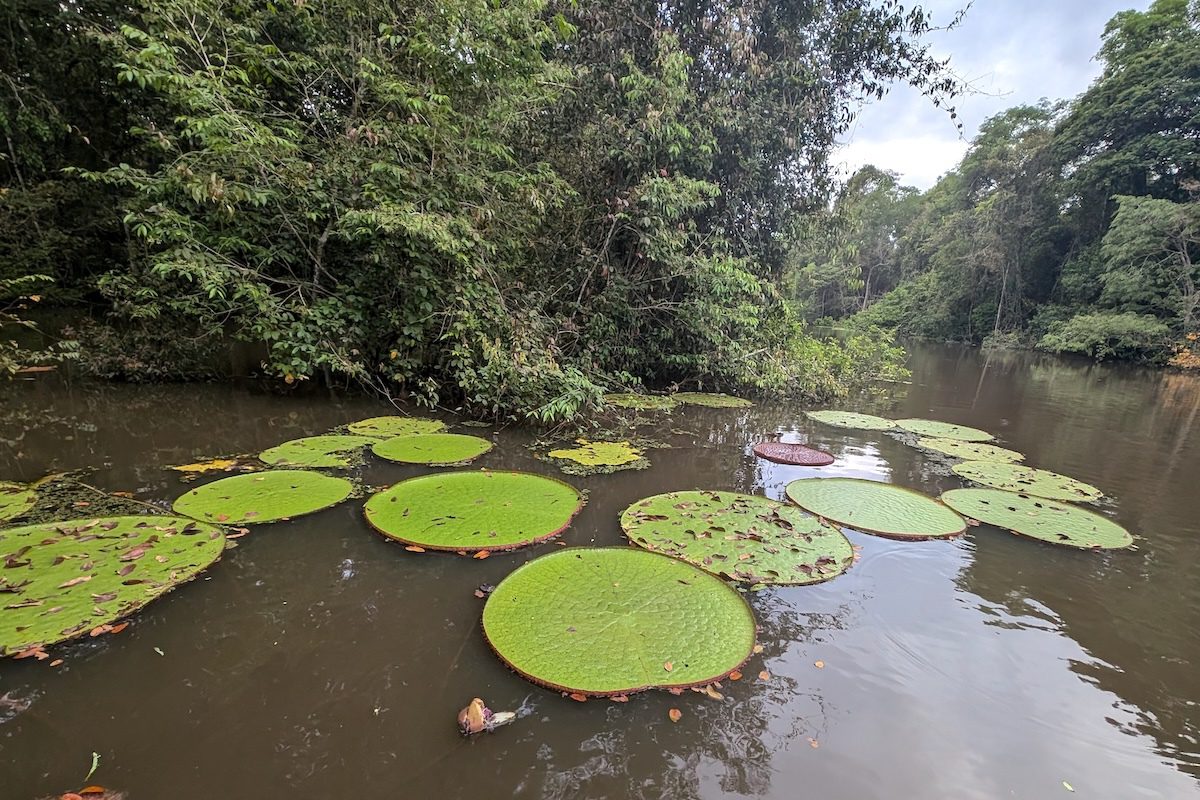
The plant had been photographed in the Inírida River region in eastern Colombia by Jeremiah Harris, a renowned horticulturist . (Harris, who sells carnivorous plants from a nursery, holds the world record for the largest Venus flytrap ever grown.)
On Instagram, he identified the plant as Victoria amazonica , but when Carlos Magdalena, a waterlily researcher at the Royal Botanic Gardens, Kew, in London, saw the photo, he knew something was amiss. Victoria amazonica is not known to grow in the Inírida region where Harris took the photo. Magdalena scanned satellite photos of the river until he spotted a group of giant waterlily pads, which can grow up to 6 feet across. Harris confirmed the lilies in the satellite image were the same ones he had seen on his trip.
Two years later, Magdalena organized an expedition of the Inírida region to find the waterlily. His team found plants, but they had produced no flowers, which were needed to identify the species. On the eve of their departure, their boatman, an Indigenous Tucano man, mentioned that he knew the whereabouts of some other waterlilies.
Setting off at 1 a.m., they followed the boatman deep into the rainforest to a small lake with five waterlilies, one of which had a flower. Details of the finding were published in the journal Phytotaxa .
The new species, dubbed Victoria colombiana, is extremely rare. With no more than 50 individuals in the wild, scientists say the giant waterlily is at risk of extinction.
Sargassum Superbloom: Seaweed Scourge or Ecological Boon?
Fifty Billion Seedlings: Can Ethiopia Replant Its Ravaged Forests?
By Samuel Abate and Freddie Clayton